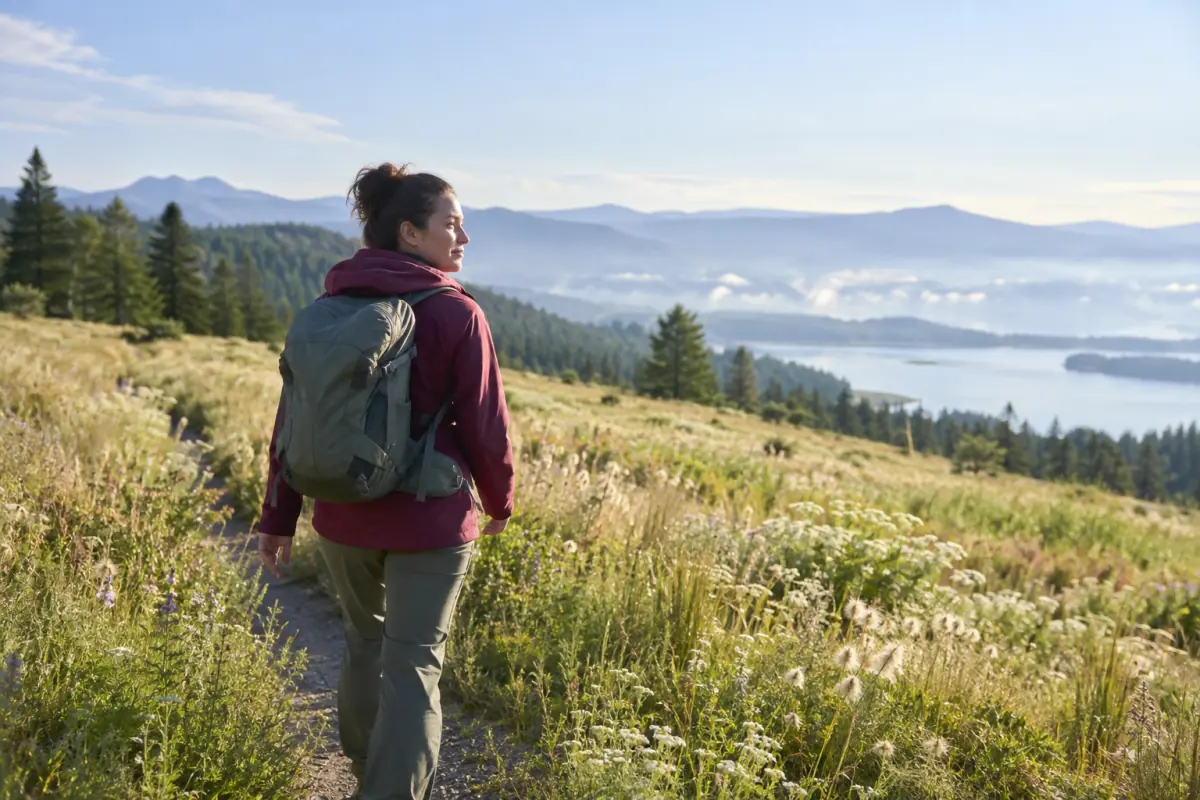
Time alone does not have to mean isolation. A familiar trail, park loop, museum, café, or neighborhood route can offer space to move at your own pace and notice what group conversation sometimes hides. Going alone changes the rhythm: you can stop when you are interested, leave when you are tired, and allow the experience to remain quiet.
For someone accustomed to coordinating with others, the first solo outing may feel strangely exposed. There is no shared conversation to explain why you are there. That discomfort often softens once attention moves outward—to the route, the weather, the room, or the ordinary activity happening around you.
Begin somewhere familiar
Your first plan does not need to be ambitious. Choose a place you already understand at a time when it is active and accessible. Walk a known route, visit a nearby bookstore, or have lunch somewhere comfortable. Familiarity leaves more attention available for the experience instead of logistics.
Set a clear beginning and end. You might plan forty minutes and give yourself permission to stay longer. A defined plan reduces the feeling that you must prove independence by enjoying an entire day. Leaving early is not failure; it is useful information about what feels right.
Choose safety over ambition
Match the activity to your ability and the environment. Check weather, opening times, transport, daylight, and local conditions. Tell someone your route and expected return when appropriate. Carry identification, a charged phone, water, necessary medication, and anything the location reasonably requires.
Stay aware of surroundings rather than disappearing completely into headphones. Trust changing conditions and your own judgment. Turn back when a route feels unsafe, the weather shifts, or your energy drops. Independence includes making conservative decisions without needing another person to validate them.
Let attention replace performance
A solo outing does not need to become content. Try leaving some moments unphotographed and unreported. Notice the architecture, overheard sounds, changing light, or the way your body feels after walking. Private enjoyment can be valuable precisely because it does not need an audience.
If self-consciousness appears, remember that most people are occupied with their own plans. Bring a small anchor if it helps: a book, sketchbook, camera, or list of things you want to see. The object gives your attention a direction without requiring you to remain busy every minute.
Understand the difference between solitude and withdrawal
Chosen solitude can restore energy and strengthen confidence. Withdrawal can narrow life when it is driven by fear, hopelessness, or the belief that connection is not available. The difference is not measured only by how much time you spend alone, but by whether the choice leaves you more able to engage with life afterward.
Keep contact with people who matter and notice if solo time consistently replaces conversations you need to have. If loneliness or anxiety is persistent and limiting, consider appropriate support. Going alone should expand your options, not become a rule that prevents you from asking for company.
Build a personal repertoire
Make a list of outings at different energy levels. A low-energy option might be coffee and a chapter near home. A moderate plan could be a gallery or long walk. A higher-energy day might include a day trip with more preparation. When free time appears, you can choose from the list instead of waiting for inspiration.
Return to the same place in another season. Familiar routes change with weather, light, and your own attention. Repetition can create a quiet sense of belonging: the café worker recognizes you, you notice a new path, or a bench becomes associated with a useful hour of thought.
Solo time is not a rejection of relationships. It can bring fresh experience back into them and reduce the pressure on one person to share every interest. The deeper benefit is knowing that companionship has more than one form. Sometimes it is conversation with someone you love; sometimes it is the steady experience of being present with yourself in the wider world.