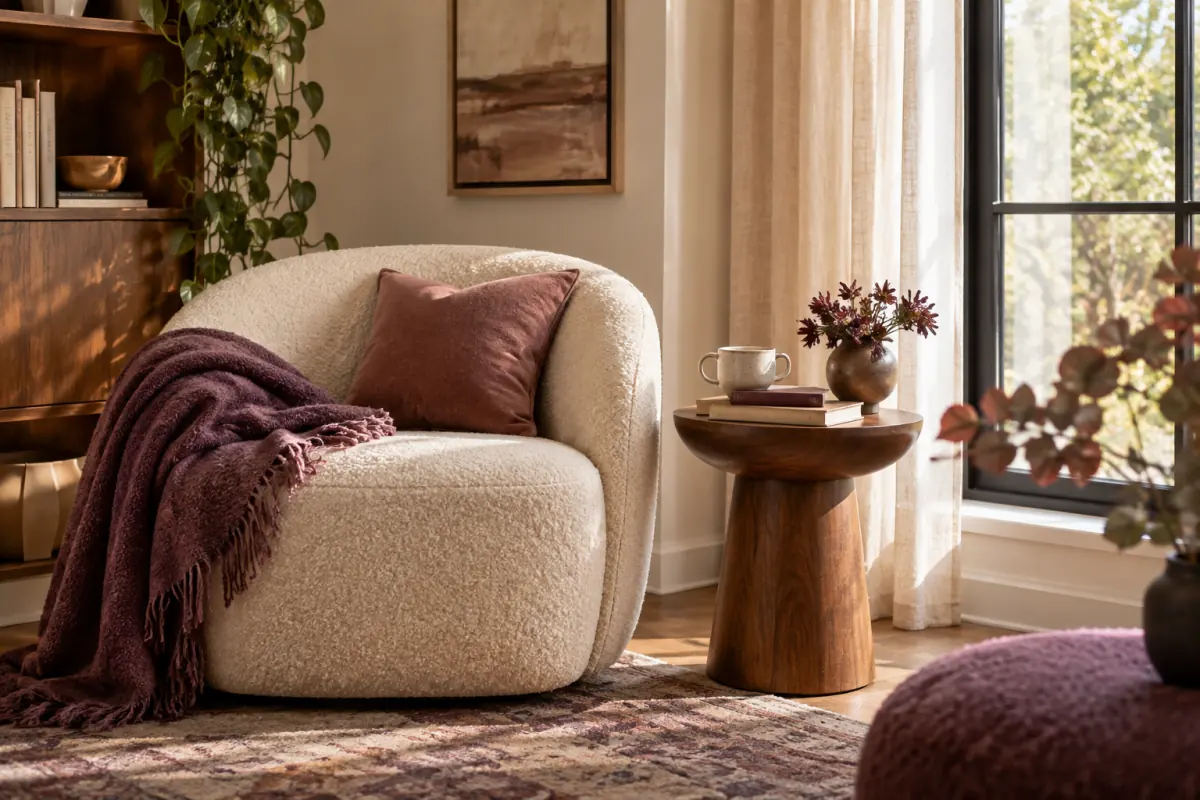
The best reading corner is not necessarily the most styled one. It is the place that makes sitting down feel easy. A beautiful chair in a dark, noisy passage may remain unused, while an ordinary seat near good light quietly becomes part of the day. Begin with your actual habits rather than an image of how reading is supposed to look.
Notice where you already pause. It may be one end of the sofa, a chair near the bedroom window, or a sheltered place on a balcony. The useful location has enough comfort for twenty minutes, does not block the household, and can hold the few things that help you remain there.
Start with the chair you already choose
Before buying furniture, try rearranging what you own. Turn a chair toward the light, move a small table within reach, or add a firm cushion for support. Sit long enough to notice what your back, neck, and feet need. Comfort is personal, and a fashionable chair is not helpful if you keep shifting after five minutes.
If space is limited, the corner does not need to be permanent. A basket can hold the current book, glasses, and a throw, allowing a shared seat to change purpose quickly. A folding footstool or a tray table can provide support and disappear when the room needs to serve something else.
Improve the light
Daylight is pleasant, but the corner should also work when you are most likely to read. Add a lamp that directs light onto the page without shining into your eyes. Place it behind or beside the reading shoulder and check for glare. An adjustable lamp is often more useful than a decorative shade that lights the room but not the book.
Keep cables out of walkways and use bulbs appropriate for the fixture. If eye strain persists, increase the light, adjust text size, take breaks, and seek professional guidance when needed. Reading should not require enduring discomfort to preserve the mood of the room.
Design for the habit
Keep the current book visible and within reach. If every session begins by searching another room, opening an app, and clearing a surface, a lower-friction activity will often win. A bookmark, coaster, and place for glasses are small details, but together they make returning easier.
Decide what does not belong. The corner may be less inviting when it becomes a charging station, laundry chair, or storage pile. Give those objects another home. You do not need a perfectly minimal room; you only need enough clear space for the action you want to encourage.
Protect a little attention
A reading corner cannot create time by itself. Pair it with a realistic cue: ten minutes after lunch, one chapter before bed, or the first part of Sunday morning. Put the phone elsewhere or use a focus setting if notifications regularly pull you away. Begin with a duration that feels easy enough to repeat.
If you share the space, explain what the corner means without treating everyone else as an interruption. A small household agreement may help: when the lamp is on, ask before starting a non-urgent conversation; when the agreed time ends, the room returns to shared use. Flexibility keeps the ritual from becoming territorial.
Let the corner reflect what you enjoy
Add only details that serve you. A blanket may help in winter, a plant may soften the view, or a small print may make the wall feel finished. Avoid buying an entire aesthetic before the habit exists. Use the corner for a few weeks, then notice what is genuinely missing.
Your reading material does not need to be worthy or difficult. Novels, essays, comics, poetry, practical guides, and magazines all belong if they hold your attention. Keep a second option nearby for days when the main book feels demanding. The goal is a relationship with reading, not a performance of taste.
The corner may move with the seasons. Follow the winter sun, the summer breeze, or the changing needs of the household. When the chair, light, book, and a small pocket of time meet in one place, reading becomes less dependent on motivation and more like an ordinary part of home.