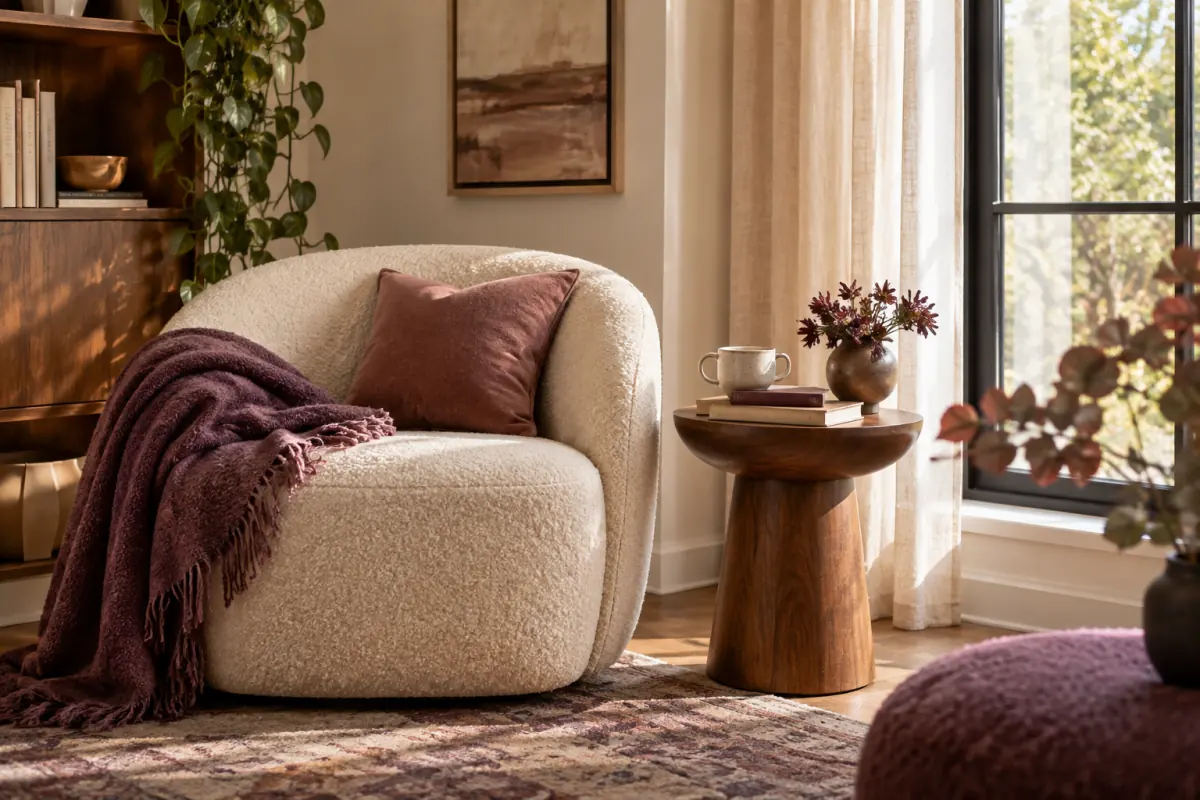
Flowers are often treated as punctuation for an occasion: a birthday, an apology, a celebration, or a table prepared for guests. Yet a small act of beauty can belong to an ordinary Tuesday just as easily. Bringing something living into the room changes the atmosphere not because it is extravagant, but because it asks you to notice the room again.
A stem opens, leans toward the light, and eventually fades. That briefness can be part of the pleasure. Unlike an object chosen to last forever, flowers make time visible. Caring for them becomes a modest ritual: trimming, adding water, removing a tired leaf, and seeing what has changed since yesterday.
Use what is available
You do not need a large arrangement. One inexpensive bunch, a few branches, garden herbs, or a single stem can be enough. Look for what is in season and within your budget. If you gather outside, take only what you have permission to take and avoid protected plants or places where picking causes damage.
The vessel can be equally simple. A clean jar, a small pitcher, or several narrow bottles often makes an arrangement feel more relaxed than a formal vase. Match the container to the amount you have rather than buying more flowers to fill a large space. A smaller grouping is easier to place where you will actually see it.
Prepare them to last
Use clean tools and trim the stems at an angle so they can take up water. Remove leaves that would sit below the waterline, because submerged foliage breaks down quickly. Start with a clean vessel and refresh the water regularly. Different varieties have different needs, so follow any care guidance provided by the grower or florist.
Choose a place away from strong heat and direct afternoon sun. A cool table, bedside shelf, or kitchen counter may work better than a bright windowsill. Keep flowers away from pets or children when the plant may be toxic, and check reliable safety guidance if you are unsure.
Let the arrangement stay loose
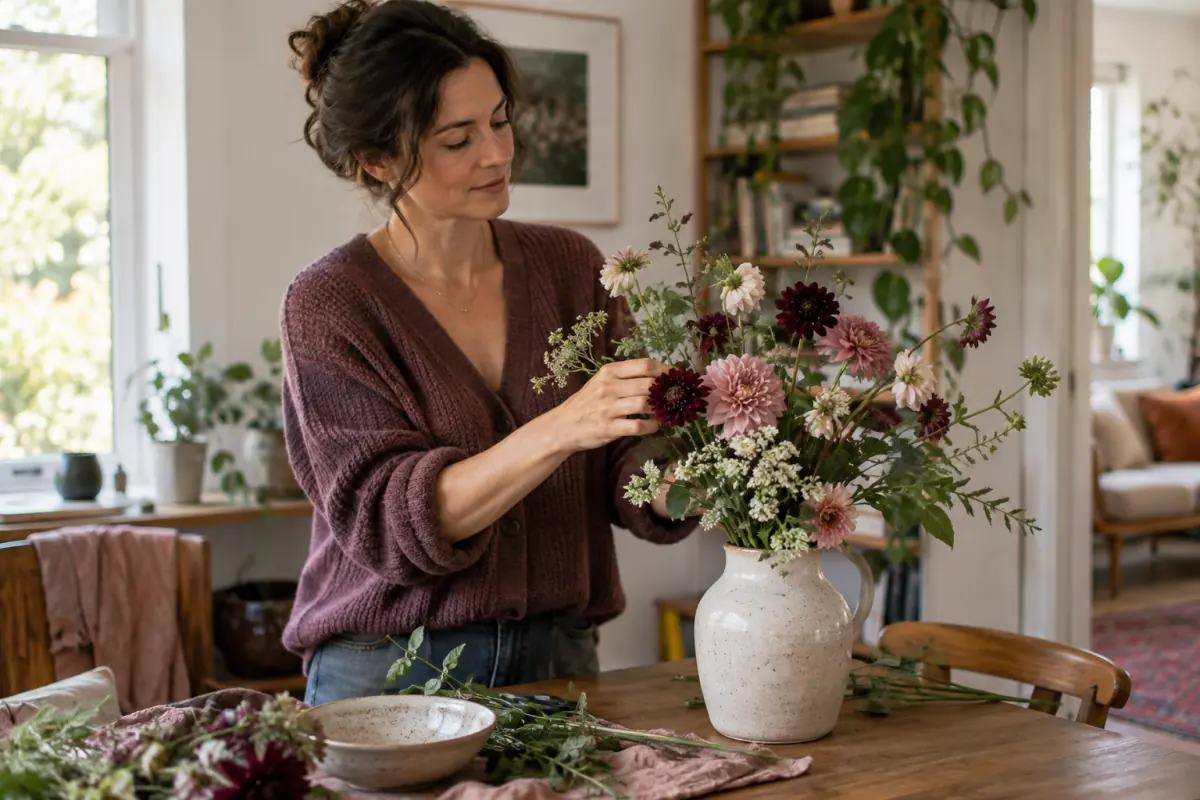
There is no requirement to make every stem symmetrical. Begin with the natural direction of the branches and turn the vessel as you work. Vary the heights, leave some open space, and stop before the arrangement feels crowded. The goal is not to reproduce a professional design; it is to make something pleasing from what you have.
If arranging feels intimidating, divide the bunch among three small containers. Repetition creates coherence without requiring complicated technique. Place one where you enter the room, one where you work, and one near the place you rest. A small amount spread thoughtfully can influence more of the home than one oversized centerpiece.
Notice the ritual around the flowers
The useful part may be less about decoration than attention. To set down the vase, you clear a surface. To change the water, you pause between tasks. To notice the first bloom, you look up from a screen. These are tiny acts, but they can interrupt the feeling that home is only a place where work accumulates.
Flowers can also become a language of care without waiting for a dramatic reason. Bring them to someone who has had a long week, divide a garden abundance with a neighbor, or place a small stem beside breakfast for the person you live with. The gesture works best when it is freely given rather than used to erase an unresolved problem.
Make room for endings
As the arrangement fades, remove spent stems and let the remaining ones have more space. Compost suitable plant material where local facilities allow it. Clean the vessel before storing it so the next arrangement begins easily. The ending is part of the practice, not evidence that the purchase was wasted.
An ordinary room does not need to wait for company before it receives care. Bringing home the flowers can be a way of saying that daily life is worth noticing while it is happening. The result may last only a week, but the habit of paying attention can remain long after the final stem is gone.